How anxiety over climate change affects college students
https://phys.org/news/2026-11-anxiety-climate-affects-college-students.html
#ClimateChange #Psychology #Science
186 posts · Last used 21h









DATE: September 25, 2026 at 02:00PM SOURCE: PSYPOST.ORG
** Research quality varies widely from fantastic to small exploratory studies. Please check research methods when conclusions are very important to you. **TITLE: Scientists identify the nose-to-brain circuit that makes slow breathing calming
Slow nasal breathing patterns directly reduce anxiety by activating a specific pathway from the nose to the brain’s emotion centers, while fast breathing tends to have the opposite effect. The research also suggests that a daily routine of simulated slow breathing can provide lasting relief from anxiety-like symptoms. The findings were published in the Proceedings of the National Academy of Sciences (PNAS).
Practices like yoga and meditation often focus on slow, rhythmic breathing to calm the mind. While scientists know that the lower brainstem controls our automatic breathing rhythm, the physical sensation of air moving through the nasal cavity also sends powerful signals to the rest of the brain. When we inhale, the physical pressure of the air activates olfactory sensory neurons. These are specialized nerve cells located in the nasal cavity that detect both chemical odors and the mechanical pressure of airflow.
Past work indicates that these nasal signals play a role in shaping how we feel. For example, a study covered by PsyPost in 2016 provided evidence that the route and rhythm of breathing directly modulate brain activity, with nasal inhalation leading to faster recognition of fearful faces. However, it was not entirely understood exactly how the speed of these nasal signals affects emotional states, or which exact brain pathways translate the rhythm of breathing into a feeling of calm or panic.
“The idea that slow breathing calms us down is ancient, but the neuroscience was unclear,” Ruiqi Wu, a professor and principal investigator at the Institutes of Brain Science at Fudan University, told PsyPost. “It didn’t tell whether breathing affects emotion through the brain’s top-down processes, through brainstem respiratory centers, or through the airflow itself.”
“We wanted to settle this causally,” Wu continued. “Our answer: the airflow itself is the signal. Its frequency alone, independent of breathing effort or conscious control, shifts anxiety up or down.”
To test this, the research team, led by Xinsong Guo and supervised by Wu, designed a series of experiments to map this connection. They began by measuring the natural breathing rates of mice, establishing two breaths per second as a slow frequency, four breaths per second as a moderate frequency, and seven breaths per second as a fast frequency.
To manipulate the nasal signals, the researchers used a technique called optogenetics. They genetically modified the olfactory sensory neurons in the mice to be sensitive to light. By shining a blue laser through tiny fiber optic cables implanted in the animals’ nasal cavities, the scientists could control exactly how fast these neurons fired, without changing the animals’ actual breathing rate.
During the light stimulation, the mice were placed in behavioral arenas to assess their anxiety levels. In the Elevated Plus Maze, a mouse explores a raised cross-shaped platform with two enclosed arms and two open arms. In the Open Field Test, a mouse is placed in a large, empty box. Mice are prey animals that naturally fear open spaces where they might be seen, so they usually hug the walls or hide in the enclosed arms. If a mouse spends more time exploring the open areas, it indicates a lower state of anxiety.
The behavioral tests showed distinct changes depending on the speed of the stimulation. When the researchers stimulated the nasal neurons at a slow rate of two times per second, the mice spent much more time in the open areas of the testing arenas, indicating a calmer state. Fast stimulation at seven times per second caused the mice to avoid the open areas, suggesting heightened anxiety. Moderate stimulation produced no noticeable changes compared to normal behavior.
“How you breathe through your nose is not just a reflection of your emotional state; it is an input your brain actively reads,” Wu said. “Slow nasal breathing engages a specific brain circuit that lowers anxiety, while fast nasal breathing pushes the same circuit in the opposite direction. This gives scientific grounding to breathing practices, with a caution: rapid breathing during stress is not just a symptom of anxiety, it may actively feed it.”
To understand what was happening inside the brain, the team recorded electrical activity in a region called the perirhinal cortex. The perirhinal cortex is an area located deep within the brain that is often associated with memory but receives direct input from the olfactory system. The researchers focused on high-gamma waves, which are fast electrical rhythms associated with active neural processing and communication.
They found that slow nasal stimulation boosted high-gamma waves in the perirhinal cortex, while fast stimulation reduced them. A higher level of high-gamma activity correlated directly with lower anxiety levels in the mice.
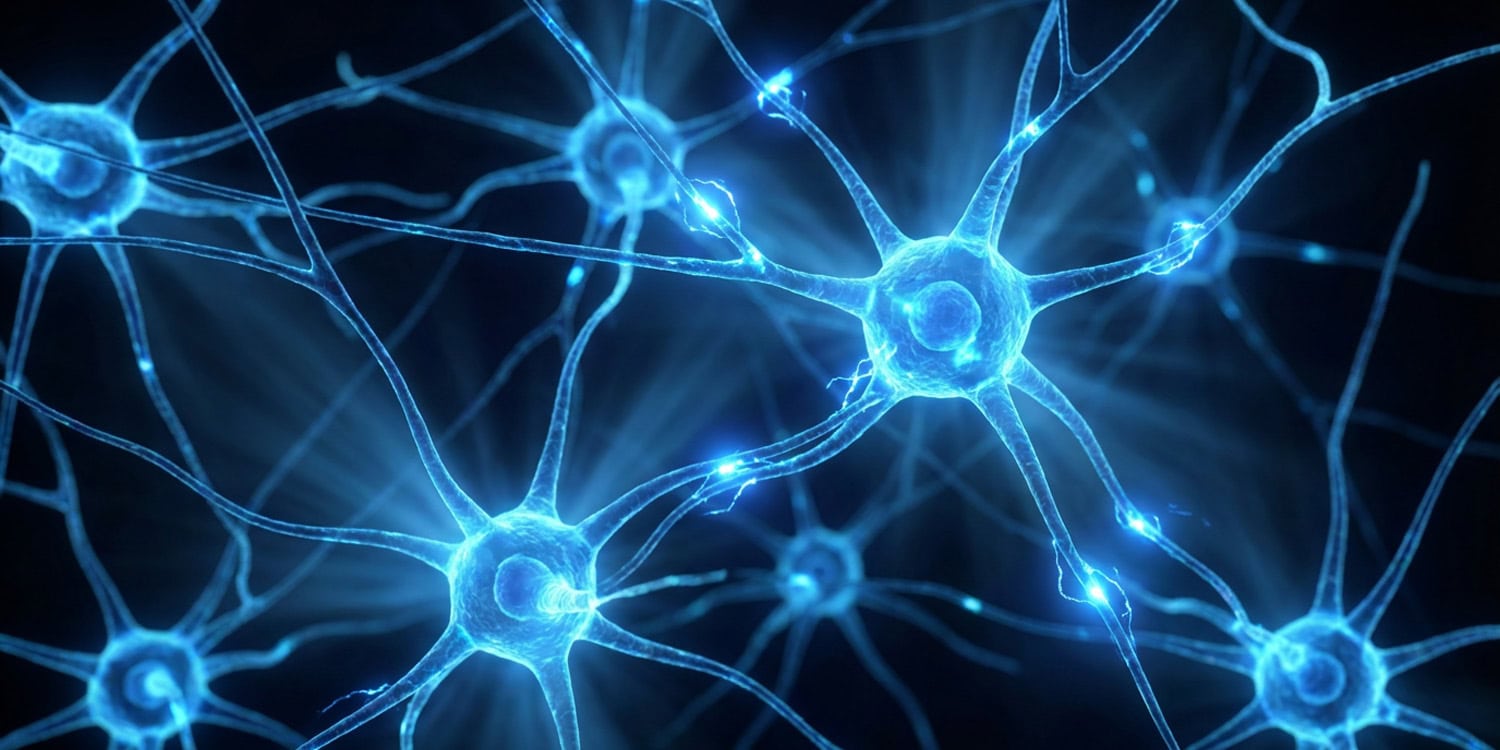
The scientists then traced the exact physical pathway these signals travel. The electrical impulses move from the olfactory sensory neurons in the nose to mitral cells in the olfactory bulb, which acts as the brain’s smell-processing center. From there, the signals travel to a specific type of cell in the perirhinal cortex called parvalbumin-positive interneurons. These cells act like pacemakers, helping to synchronize brain waves. Finally, the pathway connects to the basolateral amygdala, an almond-shaped cluster of neurons known to play a massive role in processing fear and anxiety.
The researchers were struck by the precision of this mechanism. “First, how robust the effect is: nasal input frequency alone, delivered with no other cues, reliably shifts anxiety-like behavior in both directions,” Wu noted. “Second, the bidirectionality: the same circuit interprets slow input as calming and fast input as aggravating, working like a frequency dial for emotion. Third, the identity of a key relay: long-range projection interneurons in the perirhinal cortex; these PV+ cells act as a critical node in a limbic circuit.”
To verify that this exact pathway regulates anxiety, the researchers used chemogenetics. This method involves inserting engineered proteins into specific brain cells. These proteins do nothing until the animal is given a specialized designer drug, allowing researchers to temporarily turn specific brain pathways on or off without affecting the rest of the body.
When the team used the chemical drug to activate the parvalbumin-positive cells in the perirhinal cortex, the mice became less anxious and their high-gamma brain waves increased. Turning these cells off made the mice more anxious. This provided strong evidence that this specific chain of connections translates the speed of nasal signals into emotional states.
In a final phase of the research, the team tested whether slow breathing could act as a sustained treatment. They induced a chronic anxiety-like state in a group of mice using mild foot shocks. These anxious mice showed depleted high-gamma brain waves and avoided open spaces entirely.
The anxious mice then received a daily, two-hour treatment of slow stimulation for two weeks. The team tested both the light-based method and actual mechanical puffs of air delivered into the nasal cavity. Both the light and the air treatments completely restored the mice’s behavior to normal, pre-anxiety levels. The treatments also repaired the deficit in their high-gamma brain waves, and the calming effects lasted for at least a week after the daily treatments stopped.
The findings are in line with research covered by PsyPost in 2025, which found that an anxiety-inducing environment prompted rats to breathe faster, driving direct changes in brain wave frequencies. It is worth keeping in mind that the earlier study tracked natural, spontaneous breathing patterns in rats, while the current study actively manipulated nasal airflow to alter the emotional state of mice.
“The behavioral effects in mice were robust and reproducible, and a brief daily regimen of low-frequency nasal airflow produced lasting reductions in anxiety-like behaviors,” Wu said. “But this is a mouse study. The main value is establishing the principle and the mechanism: frequency-tuned nasal input is a legitimate handle on the anxiety system. Translation to humans will require clinical testing.”
As with all research, there are a few things to keep in mind. The study relied exclusively on male mice. Future research will need to include female mice to see if hormonal fluctuations change how this specific brain circuit operates.
Also, while the light-based stimulation provided an exact way to test the brain, it does not perfectly copy the complex physical sensation of air naturally flowing through a living animal’s nose. Because humans and mice have different brain structures, more research is needed to see if specific mechanical breathing devices or guided breathing exercises could target this same pathway to treat human anxiety disorders.
“This is a mouse study, so human benefits remain to be demonstrated,” Wu cautioned. “The effect depends on nasal airflow specifically, so mouth breathing would not engage this circuit; the advice should really be ‘breathe slowly through your nose.’ And this is a promising research direction in clinical anxiety.”
Looking ahead, the researchers have several next steps planned. “We are working in three directions: testing whether the same principles hold in humans, exploring whether the nose-brain axis is disrupted in disorders involving olfactory abnormalities, and studying how nasal stimulation shapes the brain, toward a practical, protocol-based nasal stimulation modulation,” Wu explained.
“One broader point: the nose may be an underappreciated gateway into the brain,” Wu concluded. “Because nasal input reaches limbic circuits, bypassing the thalamus, the nasal route offers a noninvasive and accessible window for regulating brain states. We hope this work encourages more attention to this direction.”
The study, “A nose-to-brain circuit underlies anxiety regulation by nasal afferent frequency in mice,” was authored by Xinsong Guo, Mengyan Liu, Qingcheng Xiong, Howai Ngai, Mingdong He, Xinying Li, Yingwei Zheng, Fuqiang Xu, Minghong Ma, and Ruiqi Wu.
Private, vetted email list for mental health professionals: https://www.clinicians-exchange.org
Unofficial Psychology Today Xitter to toot feed at Psych Today Unofficial Bot @PTUnofficialBot@mastodon.clinicians-exchange.org
#psychology #counseling #socialwork #psychotherapy @psychotherapist@a.gup.pe @psychotherapists@a.gup.pe @psychology@a.gup.pe @socialpsych@a.gup.pe @socialwork@a.gup.pe @psychiatry@a.gup.pe #mentalhealth #psychiatry #healthcare #depression #psychotherapist #NoseToBrain #BreathingAndAnxiety #SlowBreathingCalm #NasalSignalPathway #OlfactoryNeurons #PerirhinalCortex #PVInterneurons #HighGammaWaves #AnxietyResearch #PNAS study


DATE: September 19, 2026 at 08:00PM SOURCE: PSYPOST.ORG
** Research quality varies widely from fantastic to small exploratory studies. Please check research methods when conclusions are very important to you. **TITLE: Memories of childhood scents associated with joy are encoded by neurons generated shortly after birth
A study published in PLOS Biology by Jules Dejou and colleagues shows that neurons developing around the time of birth in the olfactory bulb granule-cell layer (a region of the brain) are the ones encoding the memories of scents associated with joy in childhood. A separate primer by Chloé Guillaume and Elisa Galliano published in PLOS Biology discusses these results. In the study, juvenile mice exposed to attractive odors while in an enriched playful environment showed a preference for that odor in adulthood more than mice exposed to the same odor while in normal housing.
Memories evoked by odors are often unusually vivid and emotionally powerful. This is particularly the case when they originate in childhood. Compared with memories triggered by visual or auditory cues, autobiographical memories triggered by odors tend to come from earlier periods of life and are more often associated with positive emotions. Repeated exposure to the same odor in a consistent emotional context can gradually create strong associations that persist for many years. Such memories may be linked not to a specific reward, but to a broader sense of comfort, happiness, or well-being associated with familiar childhood experiences.
Olfaction is especially important early in life because it is functional from birth and can guide essential behaviors before other sensory systems are fully developed. The olfactory system also has unusually direct connections with brain regions involved in memory, reward, and emotion, including the amygdala, hippocampus, orbitofrontal cortex, and related limbic structures (a network of brain regions that control emotion and memory).
Odor information is initially processed in the olfactory bulb, where granule cells (a type of small neuron) and other interneurons (neurons that transmit signals between other neurons) help refine sensory signals before they are transmitted to higher brain regions. Many of these olfactory interneurons are generated early in life and can be shaped by early sensory experience, making them plausible substrates for long-lasting odor memories.
To identify the neurons responsible for encoding olfactory memories from childhood and to understand the neural mechanism that allows them to play an important role in forming a person’s identity, the study authors started with a survey involving 647 human participants. Participants were asked to recall an odorant that was significant in their childhood, going back as far as possible in time. They were then asked to rate the pleasantness and the presence of six basic emotions (happiness, surprise, fear, disgust, sadness, and anger) associated with that smell.
Results of this survey showed that the ratings were highest for positive emotions, namely happiness and pleasantness, followed by surprise. Ratings of negative emotions were lower. Participants were also asked how many times the event that led to their earlier odor memories occurred. Seventy-three percent of participants reported that the event occurred more than five times.
Finally, participants rated the hedonic value (the degree to which something is considered pleasant or unpleasant) of their childhood odorant, which they found to be predominantly pleasant. The authors used another dataset to see whether those smells are intrinsically pleasant or whether participants only perceived them that way. The results indicated that those smells do tend to be intrinsically pleasant, indicating that individuals prefer to make pleasant odors a part of their autobiographical memory.
Based on the human survey results, the researchers developed a mouse model. They divided 23-day-old (juvenile) mice into two groups. One group was exposed up to their 33rd day of life to an attractive odor such as limonene, citronellol, or camphor while the mice were in a positive, enriched, playful environment.
This pairing between the odor and the environment was repeated five times during the 10 days of the experiment. It was done every other day for 2 hours. The second, control group of mice was also exposed to the same odor, but in their ordinary housing. The study authors assessed the emotions of the mice by registering their ultrasonic vocalizations, with more numerous and higher frequency vocalizations indicating a more positive emotional state.
Later, when the mice were 2 months old (i.e., young adults), the study authors tested whether they showed a preference for that odor. The mice that learned to associate the odor with an enriched environment and positive emotions indeed showed a greater preference for it compared to mice that experienced it in their ordinary housing. The researchers observed that this memory recall relied on increased functional connectivity in the brain’s reward system.
Investigation of the neural basis of this smell memory found that neurons born around the first day of life in the olfactory bulb granule-cell layer tended to be particularly activated by the odor the mice learned to associate with positive emotions as juveniles. When these neurons were silenced using optogenetics (a biological technique that uses light to control neurons that have been genetically modified to express light-sensitive ion channels), the preference for the odor was reduced, suggesting that these neurons are a key part of the early memory recall mechanism.
However, by 6 months of age, that memory was gone, unless the mice were periodically re-exposed to the scent. In these older mice, memory persistence was no longer dependent on the neonatal-born granule cells. Instead, the persistence of the memory was associated with a large-scale reorganization of the brain’s functional networks, shifting away from the reward system to rely on strengthened connections within the olfactory-limbic system.
The study contributes to the scientific understanding of childhood odor memories and their role in overall psychological functioning. However, it should be noted that while the initial survey was conducted on humans, the experimental manipulations were conducted on mice. While mice and humans share many physiological similarities, they are still very different species, and the exact neural network mechanisms in humans might differ.
The primer, “Neurons generated shortly after birth encode the scent of early-life happiness,” was authored by Chloé Guillaume and Elisa Galliano. The paper, “Positive early-life olfactory memory is rooted in the olfactory bulb and triggers large-scale changes beyond the olfactory system,” was authored by Jules Dejou, Anna Athanassi, Théo Brunel, Marc Thevenet, Anne Didier, and Nathalie Mandairon.
Private, vetted email list for mental health professionals: https://www.clinicians-exchange.org
Unofficial Psychology Today Xitter to toot feed at Psych Today Unofficial Bot @PTUnofficialBot@mastodon.clinicians-exchange.org
#psychology #counseling #socialwork #psychotherapy @psychotherapist@a.gup.pe @psychotherapists@a.gup.pe @psychology@a.gup.pe @socialpsych@a.gup.pe @socialwork@a.gup.pe @psychiatry@a.gup.pe #mentalhealth #psychiatry #healthcare #depression #psychotherapist #childhoodolfactorymemories #neuroscience #olfactorybulb #earlylifejoy #neurondevelopment #odormemory #positivity #brainrewardsystem #optogenetics #animalstudies
DATE: September 18, 2026 at 06:00AM SOURCE: PSYPOST.ORG
** Research quality varies widely from fantastic to small exploratory studies. Please check research methods when conclusions are very important to you. **TITLE: “Mankeeping” takes a toll on women’s mental health and relationship satisfaction, study suggests
A newly developed psychological survey provides a way to measure the unpaid, emotional labor that women perform to manage and maintain the social lives of their romantic partners. The research, published in Sex Roles, details the creation of a scale that captures how women experience the effects of men’s shrinking friendships. The tool offers a standardized way to study this dynamic and its impacts on relationship satisfaction and individual well-being.
The survey centers on a concept called mankeeping. This term describes the effort women exert to compensate for the decline in their male partners’ social networks. It involves behaviors like organizing social events, encouraging men to reconnect with friends, and serving as a primary or sole source of emotional support to prevent the men from becoming isolated.
The concept builds on a long history of sociological research into household and emotional labor. For instance, a 1985 study established the idea of kinkeeping, which refers to the everyday, invisible work that women typically perform to keep family members connected and preserve relational harmony.
At the same time, recent public health data indicates that men are facing a widespread decline in close friendships. A 2022 study observed that men generally face greater social isolation than women across most of their adult lives. This vulnerability is also reflected in a study covered by PsyPost in 2026, which showed that psychological distress tends to shrink men’s support networks much more severely than it does for women.
Recognizing the intersection of these two trends, researchers Angelica P. Ferrara and Dylan P. Vergara formally theorized mankeeping in a 2024 paper. They proposed that the ongoing decline in men’s friendships shifts a heavy, unreciprocated social burden onto their female partners, who act to shield the men and the relationship from the negative consequences of isolation.
“‘Mankeeping’ is something many women express that they have been doing for their partners for quite some time,” lead researcher Vincent Mancini told PsyPost. Mancini is an adjunct senior research fellow at the UWA Medical School and a senior research fellow at the UWA Centre for Child Health Research. “With loneliness being a population health crisis that has gendered features, the aim of this work was to better understand how women may engage in additional effort to help maintain their male partner’s social needs.”
Prior to this work, scientists lacked a validated survey to actually quantify the extent of mankeeping and its psychological toll. By developing a specialized scale, Mancini and his colleagues aimed to provide a reliable way to investigate how men’s loneliness reshapes the daily lives of the women who care for them. To build the scale, the researchers first drafted a large pool of questions based on the initial theory of mankeeping.
They recruited 402 women residing in the United States who had been in a heterosexual romantic relationship for at least six months. The participants rated their agreement with 62 potential scale items using a seven-point rating system. They also completed several established psychological questionnaires measuring depression, anxiety, stress, relationship burnout, relationship burden, and overall relationship satisfaction.
Through a statistical process that groups related questions together based on how participants respond, the researchers refined the survey down to 46 items spanning six distinct categories. These six factors include the actual behaviors women perform to manage their partner’s social life, the emotional impact of that labor, and a recognition that their emotional support is often unequal or unappreciated. The remaining three factors capture the woman’s appraisal of her partner’s social network status, a desire for her partner to expand his friendships, and the extent to which the partner depends on her for emotional support.
The results indicated that the survey accurately captured theoretical predictions about mankeeping. Higher scores across the mankeeping dimensions strongly correlated with lower relationship satisfaction and higher levels of relationship burden and burnout. In addition, five of the six dimensions positively correlated with women’s self-reported depression, anxiety, and stress.
“There is now a validated and useful measure that can help to assess how women engage in this effortful process to help address their partner’s unmet social needs,” Mancini said. “Women who engage in these behaviors more tended to show poorer relationship satisfaction, which may signal the importance of social connections outside the romantic relationship that can help to more widely distribute social needs.” He added that “these results, whilst preliminary, indicate fairly robust and strong effects.”
Interestingly, simply appraising that a partner lacked friends was not strongly linked to psychological distress; rather, it was the active behaviors and the resulting emotional impact that were associated with poorer mental health. The data also showed that women who held more traditional beliefs about gender roles were more likely to report engaging in mankeeping behaviors.
Next, the team sought to verify that their newly developed survey, titled the Mankeeping Scale Partner Report, operated consistently across different populations. They administered the 46-item survey to a second group of 395 romantically partnered cisgender women living in the United Kingdom. Statistical analyses confirmed that the original six-category structure fit the UK data just as well as the US data. This suggests that the survey measures the same underlying concepts regardless of which of these two countries the women reside in, establishing what researchers call measurement invariance.
Recognizing that a 46-item questionnaire can be overly long for many research or clinical settings, the scientists combined the data from both the US and UK participants, totaling 797 women. They identified the three most mathematically and theoretically strong questions from each of the six categories to create an 18-item brief version. Testing showed that this shortened survey maintained excellent reliability and produced similar associations with relationship satisfaction and psychological distress as the full-length version, offering a practical alternative for future studies.
“It is incredibly useful to have validated measures of concepts such as mankeeping, so that research can move from theory to actually testing associations with possible outcomes,” said Sara B. Chadwick, an assistant professor of Gender and Women’s Studies and Psychology at the University of Wisconsin-Madison who was not involved in the study. “Having a validated measure of mankeeping will allow researchers to better understand how women’s efforts to support and maintain their men partners’ social networks and emotional health are connected to a variety of outcomes for both women and men in these partnerships,” she told PsyPost.
“The development of this measure offers a clear extension of research theorizing ‘mankeeping,’ and builds on previous feminist scholarship that has aimed to conceptualize the many ways that gender norms shape women’s romantic relationships with men,” Chadwick added.
She noted that earlier research has highlighted how gender norms often position women as caregivers for their male partners in ways that mimic a parent-child dynamic. “Overall, I would say this offers an important contribution to feminist research by specifically naming the kinds of behaviors that women engage in for the sake of supporting their men partners and by creating a way for researchers to measure and thus further explore it.”
As with all research, there are a few things to keep in mind about these findings. The survey relies entirely on self-reported data from one partner, meaning it captures a woman’s perception of her partner’s social life rather than an objective measure of his actual friendships. A man might feel his social needs are adequately met, even if his partner appraises his network as lacking. Future studies would benefit from surveying both members of a couple simultaneously to get a complete picture of the relationship dynamics.
“It is absolutely crucial to recognize that these results at the population level might not apply in the same way to the individual/couple level,” Mancini cautioned. “Romantic couples are incredibly diverse, not every man is lonely, nor does every woman need to engage in this process. This paper should also not take away from the importance of understanding loneliness as a population health issue, that all genders can experience.”
Chadwick agreed that context is crucial, noting that emotionally supporting a partner or helping them maintain social networks can sometimes be a consensual arrangement or a necessity based on temporary life circumstances, such as moving to a new city or dealing with a period of depression.
“The behaviors listed are not in themselves problematic, even when they may be burdensome,” Chadwick explained. “The key here is consent and mutuality, or in other words, it is essential that women either have consented to an arrangement where they take on the majority of social networking and emotional labor, or that this labor is offered to women in their times of need from their men partners.”
The current data is also a single snapshot in time, which makes it impossible to determine a strict chain of cause and effect between mankeeping behaviors and declining mental health. In addition, women’s responses to the survey might be influenced by internalized societal expectations about how a romantic partner is supposed to act.
Because the study focused on populations in the US and the UK with similar cultural norms, the survey might perform differently in other cultures. Expanding the research to include non-Western populations, as well as developing a companion survey to capture how men experience and perceive this social labor, will help clarify the full scope of this dynamic.
The issue arises, she pointed out, when women are automatically expected to take on this labor. “Unfortunately of course, with the way that gender norms function, the majority of mankeeping is indeed likely to be nonconsensual and non-mutual and thus have a disproportionately negative impact on women,” Chadwick said. In future research, she hopes to see investigations into whether this support is reciprocated, noting that the labor might not have a negative impact “if women feel they are offered the same types of labor from their partner in their own time periods of loneliness or need.”
“Our team is looking to engage in some longitudinal work that can allow us to follow couples over time, so that we can better understand how the phenomenon of mankeeping unfolds over time,” Mancini explained. “Being able to also capture the experiences of male partners, and develop interventions that can bolster the relationship quality between partners are our key future priorities.” He noted that the researchers are “always happy to chat to clinicians, researchers, and communities who have thoughts and ideas about the utility of this work!”
The study, “Measuring Mankeeping: Development and Validation of a Scale Assessing How Women Experience the Impact of Men’s Declining Social Networks,” was authored by Vincent O. Mancini, Briana N. Guerrini, James J. Clarke, Dylan P. Vergara, Zac E. Seidler, and Angelica P. Ferrara.
Private, vetted email list for mental health professionals: https://www.clinicians-exchange.org
Unofficial Psychology Today Xitter to toot feed at Psych Today Unofficial Bot @PTUnofficialBot@mastodon.clinicians-exchange.org
#psychology #counseling #socialwork #psychotherapy @psychotherapist@a.gup.pe @psychotherapists@a.gup.pe @psychology@a.gup.pe @socialpsych@a.gup.pe @socialwork@a.gup.pe @psychiatry@a.gup.pe #mentalhealth #psychiatry #healthcare #depression #psychotherapist #Mankeeping #MankeepingScale #WomensEmotionalLabor #RelationshipHealth #GenderNorms #LonelinessInMen #FemaleCaregiving #RelationshipSatisfaction #EmotionalSupport #SocialNetworks