#earth

99 posts · Last used 22d

"Hope will never be silent." — Harvey Milk, activist and politician Survival Tactic for the Day: If you've been holding your breath around someone who makes you shrink — and you know who they are — exhale the moment you leave the room. Audibly. Let your lungs hear themselves. You don't owe quiet to anyone who costs you air https://thistleandmoss.com/p/3-4-2026-mourning-a-loss #meditation #spirituality #druid #earth #nature #eco #gaia #brigid #pagan #trans #queer #lgbtqia
7
4
1
0
Replying to
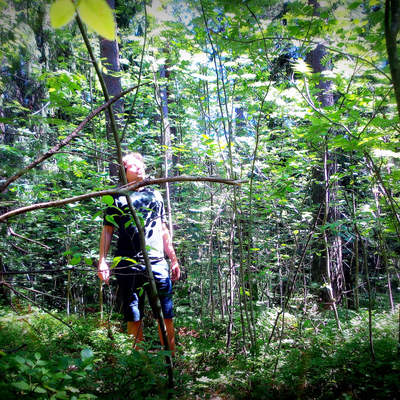
The wheel has turned past the equinox and leans now toward Beltane, toward the fire-month, though we aren't there yet. We are in the thick of the quickening — tha an talamh a' dùsgadh, the earth is waking — and she is not waking gently. Pollen coats every surface like a yellow confession, the land saying: I've held this in all winter and I am done being careful about it. https://thistleandmoss.com/p/3-4-2026-mourning-a-loss #meditation #spirituality #druid #earth #nature #eco #gaia #brigid #pagan #trans #queer #lgbtq
4
3
2
0
Silence of the Earth Environmental Campaigners Assassinated 78 min - Available until 09/07/2027 Berta Cáceres, Aldo Zamora, and Paulino Guajajara: These three environmental activists bravely fought for the protection of forests, rivers and indigenous communities - and were murdered for it. Who were the perpetrators? And why have they gone unpunished? This documentary investigates the involvement of large corporations and governments in these crimes. arte.tv/en/videos/113760-000-A… #ArteTV #ArteReportage #environment #earth #SouthAmerica #society #investigation #activism #amazonia #indigenous
0
0
1
0
"Human lives are not merely supported by nature: they are entangled with it, emerge from it, are enmeshed in it, nourished by it, and dependent on it in countless ways, from local to planetary. Humanity is an intimate part of nature, so development that undermines the living world ultimately undermines itself." https://aeon.co/essays/it-doesnt-have-to-be-us-versus-nature #Nature #Global #Earth #Science #China #Development #Progress #Economy #Economics #Health
22
0
12
0
Ummm... There's already a problem with pollution from #SpaceDebris on #Earth. Let's not add to it, eh? #YorkSpaceSystems introduces new spacecraft platform built for #VeryLowEarthOrbit #VLEO Munis Raza Thu, September 3, 2026 "York Space Systems has introduced a new spacecraft platform purpose-built for Very Low Earth Orbit. The company describes VLEO as one of the fastest-growing segments in the industry. The Denver-based firm calls the design LX/V-CLASS, adapted from its existing S-CLASS and LX-CLASS product lines rather than developed entirely from scratch. "Customers use a spacecraft platform as the underlying structure and subsystems onto which they integrate their own mission-specific payload, such as sensors or communications equipment. York says LX/V-CLASS extends that same approach into VLEO, broadening the range of missions the company can support for both commercial and government customers. "Very Low Earth Orbit sits at altitudes low enough that atmospheric drag naturally clears debris from the surrounding environment. That differs from higher orbits, where defunct hardware can linger for years. That same drag creates real engineering challenges. Spacecraft flying there must actively maintain their orbit and attitude far more aggressively than they would elsewhere." Read more: https://tech.yahoo.com/science/articles/york-space-systems-introduces-spacecraft-101300072.html #SpaceDebris #Satellites #SpacePollution #HeavyMetals #LithiumPollution
1
0
2
0
RaiNews: Decolla la missione segreta di SpaceX: il Falcon 9 torna a terra dopo il lancio Il razzo ha portato in orbita un carico classificato per la Space Force statunitense, mentre il booster è rientrato con precisione sulla nave drone nel Pacifico SpaceX’s secret mission launches: The Falcon 9 returns to Earth after launch. The rocket carried a classified payload for the U.S. Space Force, while the booster returned to precision on the drone ship in the Pacific. #Falcon #Earth #theUSSpaceForce #Pacific
0
0
0
0
Agi: Stelle sfocate per la Nasa, prime immagini dallo Spazio del telescopio Roman AGI — La camera principale del telescopio spaziale Nancy Grace Roman, il più grande osservatorio panoramico mai costruito, ha acquisito la sua prima immagine di prova dopo essere stata accesa per la prima volta. Lo ha annunciato la Nasa. L'immagine mostra stelle sfocate, dalla forma ad anello e distribuite ciascuna su migliaia di pixel, perché i rilevatori si trovano ancora nella posizione prevista per il lancio, lontana dalla messa a fuoco ottimale. Secondo l'agenzia spaziale statunitense, il risultato corrisponde alle aspettative per questa fase. L'immagine servirà come punto di partenza per allineare gli elementi ottici e regolare la messa a fuoco, fino a far apparire ogni stella come un punto nitido. "Dopo anni di lavoro per costruire e collaudare lo strumento a terra, abbiamo ora la conferma che funziona nello spazio", ha dichiarato Josh Schlieder, scienziato responsabile dello strumento ad ampio campo presso il Goddard Space Flight Center della Nasa. Le capacità del telescopio Roman Il telescopio, dotato di uno strumento a infrarossi da 300 megapixel, è destinato a studiare l'energia oscura, gli esopianeti e l'astrofisica infrarossa, con risultati che potrebbero modificare gli attuali modelli della fisica. Lanciato il 30 agosto dalla Florida, il Roman è diretto verso un'orbita intorno al punto di Lagrange L2, a circa 1,5 milioni di chilometri dalla Terra, che dovrebbe raggiungere all'inizio di dicembre. Grazie a un campo visivo almeno cento volte superiore a quello di Hubble, il telescopio studierà miliardi di galassie. Primi risultati scientifici nel 2027 La Nasa prevede di pubblicare le prime immagini scientifiche all'inizio del 2027. L'agenzia ha inoltre calcolato che il Roman dispone di carburante sufficiente per almeno 22 anni di attività, più del doppio della durata inizialmente prevista, grazie alla precisione del lancio e al peso della sonda inferiore alle stime. Blurred stars for NASA, first images from the Roman Space Telescope NASA — The main camera of the Nancy Grace Roman space telescope, the largest panoramic observatory ever built, has captured its first test image after being powered on for the first time. NASA announced it. The image shows blurred stars, ring-shaped and distributed across thousands of pixels, because the detectors are still in their launch position, away from optimal focus. According to the U.S. space agency, the result corresponds to expectations for this phase. The image will serve as a starting point to align the optical elements and adjust the focus, until each star appears as a sharp point. “After years of work building and testing the instrument on the ground, we now have confirmation that it’s working in space,” said Josh Schlieder, instrument program lead at NASA's Goddard Space Flight Center. Roman Telescope Capabilities The telescope, equipped with a 300-megapixel infrared instrument, is designed to study dark energy, exoplanets and infrared astrophysics, potentially yielding results that could modify current physics models. Launched on August 30th from Florida, Roman is headed toward an orbit around the Lagrange point L2, approximately 1.5 million kilometers from Earth, which should be reached early in December. Thanks to a field of view at least one hundred times larger than Hubble’s, the telescope will study billions of galaxies. First Scientific Results in 2027 NASA anticipates publishing the first scientific images at the beginning of 2027. The agency has also calculated that Roman has enough fuel for at least 22 years of operation, more than double the initially planned duration, thanks to the precision of the launch and the probe’s weight being lower than estimates. #first #JoshSchlieder #Florida #Roman #Lagrange #Earth #Hubble
0
0
0
0