#genderbias
21 posts · Last used 22d
Replying to
Update. For research in #Brazil "indexing biases disproportionately affect researchers focusing on locally relevant topics through articles that are written in Portuguese. Given women's overrepresentation in this group, our findings illustrate how indexing biases contribute to gender inequalities in science."
https://www.researchgate.net/publication/391183750_Occluded_Topics_The_hidden_half_of_Brazilian_research#Gender #GenderBias #Multilingualism #MultilingualResearch
Replying to
New study: "More women-led papers receive at least one media mention in women-underrepresented fields, but they are cited less frequently across all fields. Women authors are underrepresented in national outlets and are more often reported by liberal media. Sentiment analysis shows that men-led papers are more often associated with positive sentiment in news text, while women-led papers elicit more negative sentiment."
https://journals.sagepub.com/doi/abs/10.1177/10755470251360187#Gender #GenderBias #ScholComm
Replying to
Update. "Women are significantly underrepresented among highly cited scholars globally (0.255 women per man) and receive fewer citations and have lower h-indexes than men in most regions and disciplines. However, after controlling for productivity and career length, female scholars are cited more than men in the pooled sample, Asia, Europe, and in two fields (natural sciences and exact sciences/physics). Despite this, women’s h-index remains significantly lower than men’s in all regions except Africa and South America, and in all fields except social sciences."
https://journals.plos.org/plosone/article?id=10.1371/journal.pone.0334690#Gender #GenderBias #ScholComm
Replying to
Update. "Authors with very feminine and masculine first names respectively get a lower and higher share of citations for every article published, irrespective of their contribution role."
https://arxiv.org/abs/2512.08219#Gender #GenderBias #ScholComm
Replying to
Update. "In male-dominated fields, women have significantly broader research interests than men, while this gap diminishes and reverses in more gender-balanced fields. Although broader publication trajectories help women increase publication output, this strategy carries steeper citation penalties for women than for men. The results suggest that academic fields act as sites of inequality production, channeling women toward research patterns that boost immediate productivity while undermining long-term scholarly influence."
https://journals.sagepub.com/doi/pdf/10.1177/23780231251396273
#Gender #GenderBias #ScholComm
Replying to
Update. In the field of oil pollution research, "female authors accounted for about 32% of the total authors…were significantly underrepresented in most of the African countries [and in] the UK and Norway…Gender variation in oil pollution publications was discovered to be influenced by religion in Africa; Islam had the mean highest rank when compared with Christianity."
https://doi.org/10.4314/jasem.v29i11.22
#Gender #GenderBias #ScholComm
Replying to
Update. "We conduct a comprehensive comparison between peer-review scores and citation-based metrics across various scientific fields [in Italy]…While both evaluation methods exhibit sex bias, peer review systematically penalizes women more severely than citation-based metrics."
https://www.sciencedirect.com/science/article/pii/S1751157725001245
#Gender #GenderBias #ScholComm
Replying to
Update. A letter to the editor about a study I posted to this thread 11/23/25: "The suggestion that [the lower #retraction rate for women] is because male researchers undergo more scrutiny, propose bolder ideas and lead larger and more dynamic teams than do female researchers implies that male scientists are better at science. As female scientists, our lived experience points to alternative explanations: elevated rigour and scientific integrity by female scientists or more critical peer review of female-led manuscripts."
https://www.nature.com/articles/d41586-026-00120-y
(#paywalled)
#Gender #GenderBias #ScholComm
Replying to
Update. "By analyzing all articles indexed in the PubMed database (>36.5 million articles published in >36,000 biomedical and life sciences journals), we show that the median amount of time spent under review is 7.4%–14.6% longer for female-authored articles than for male-authored articles."
https://doi.org/10.1371/journal.pbio.3003574#Gender #GenderBias #ScholComm
Replying to
Update. "Citation counts [for female authors] are on average 5.5% lower than those of comparable male authors…Papers produced by all-female teams receive 56.7% fewer citations than those by all-male teams, while mixed-gender teams achieve a 30.9% citation advantage."
https://ceur-ws.org/Vol-4155/paper10.pdf#Gender #GenderBias #ScholComm
Replying to
Update. Many studies look at the acceptance rate for articles by women at high-impact journals. This one looks at the submission rate, and finds that women submit significantly fewer articles to these journals than men. (The percentages differ by field.) When asked why, the most common response was that "they were advised not to."
https://elifesciences.org/articles/90049#Gender #GenderBias #ScholComm
Replying to
Update. "This study examines how editorial roles are distributed by gender across a national platform-based journal system…[We] distinguish four role categories—executive, operational, support, and symbolic…Women are significantly less likely to hold executive editorial positions…and more likely to occupy operational…and support roles…When these roles are aggregated into a single gatekeeping indicator, the gender coefficient becomes non-significant—not because stratification is absent, but because opposing effects cancel each other out. Role-disaggregated analysis is therefore a necessary condition for valid inference about editorial gender equity in role-differentiated settings."
https://www.researchsquare.com/article/rs-9152762/v1#Gender #GenderBias
Replying to
Update. "Despite overall gains since 2015, women remain underrepresented in scientific organizations compared with their share of the global scientific workforce (31.1% of researchers worldwide in 2022). In national academies, women represent on average 19% of members in 2025, up from 12% in 2015 and 16% in 2020, with proportions ranging from 2% to nearly 40%. The share of academies with very low representation (fewer than 10% women members) has fallen by around half since 2015."
Replying to
Update. In the field of emergency medicine, most journals (66%) did not comply with the Sex and Gender Equity in Research (#SAGER) guidelines. However, those that did had "significantly" higher citation impact than those that did not.
https://escholarship.org/uc/item/6ct1w42s#Gender #GenderBias #Medicine
Replying to
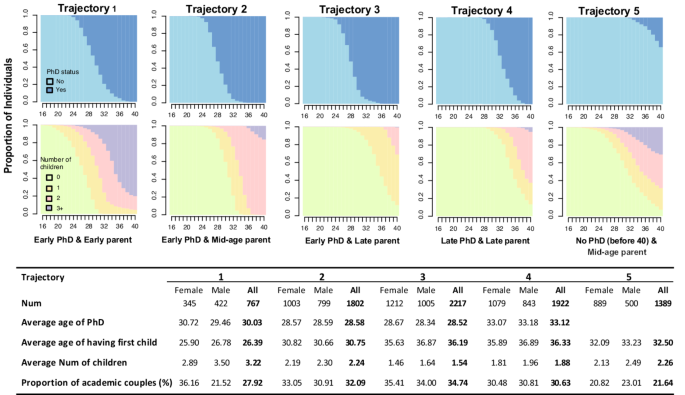
Update. "Early parenthood was associated with the largest gender disparities in scientific citations, favoring men, while these disparities diminished among those who became parents after age 35."
https://link.springer.com/article/10.1007/s10734-026-01668-4
#Gender #GenderBias
Replying to
Update. "An analysis of first and last authorship in journals tracked by Nature Index reveals a persistent gender imbalance…indicating that recognition in top-tier academic publishing has not kept pace with women’s growing presence in research. Among the natural-sciences journals tracked by the index, women represented 29% of first-author positions and 17% of last-author positions in 2025. These figures have improved only slightly over the past decade."
https://www.nature.com/articles/d41586-026-01495-8
Also see the data.
https://www.nature.com/nature-index/author-gender-ratio#Gender #GenderBias
Replying to
Update. "We found that gendered male authors represented 60% of first and last authors, 65% of first and last authorships (FLAs), and 91% of highly productive authors (those with ≥ 10 FLAs). Last authorships were particularly male-dominated, with 2.7 times as many last authorships by gendered male authors as by gendered female authors."
https://journals.plos.org/plosone/article?id=10.1371/journal.pone.0352401#Gender #GenderBias
Replying to
Update. "There is no clear evidence of systemic gender differences in funding success rates. However…if funding rates do not show gender differences, there are still clear gender differences in the system overall, with women representing only 36% of all applicants. Moreover, the paper warns against concluding that gender bias is absent simply because funding rates appear equal."
https://researchonresearch.org/new-rori-study-finds-no-gender-differences-in-funding-rates-but-warns-equal-numbers-can-mask-bias/
Primary source
https://rori.figshare.com/articles/preprint/How_do_grant_application_criteria_influence_gender_differences_in_research_funding_RoRI_Working_Paper_No_22_/32881505#Funding #Gender #GenderBias
Replying to
Update. In Spanish cancer research, "the number of papers authored by men was greater than that authored by women, although there was a gradual trend towards parity. Interestingly, the two most prolific authors are women, and women have larger co-authorship networks than men do. Funding is an important factor in determining whether an article is published in the first or second quartile [of #JIF journals], as is collaboration between two or more countries. However, the percentage of women and preferred authorship does not determine the [citation] impact of a publication, and as the percentage of women increases, the citation count decreases."
https://onlinelibrary.wiley.com/doi/full/10.1002/leap.2086#Gender #GenderBias
Replying to
Update. "We calculated the ratio between the overall share of female authors and the share of female corresponding authors [in >220 million publications by ≈ 60 million authors, over the last 125 years]…Our analyses reveal a continuous increase in overall female participation, rising from approximately 10% in the 1910s to over 40% in recent years…However, over the past two decades, this trend has globally inverted, indicating a decline of the traditional [disparity]…Despite these overarching trends, significant disciplinary and regional differences persist."
https://arxiv.org/abs/2607.15059
#Gender #GenderBias